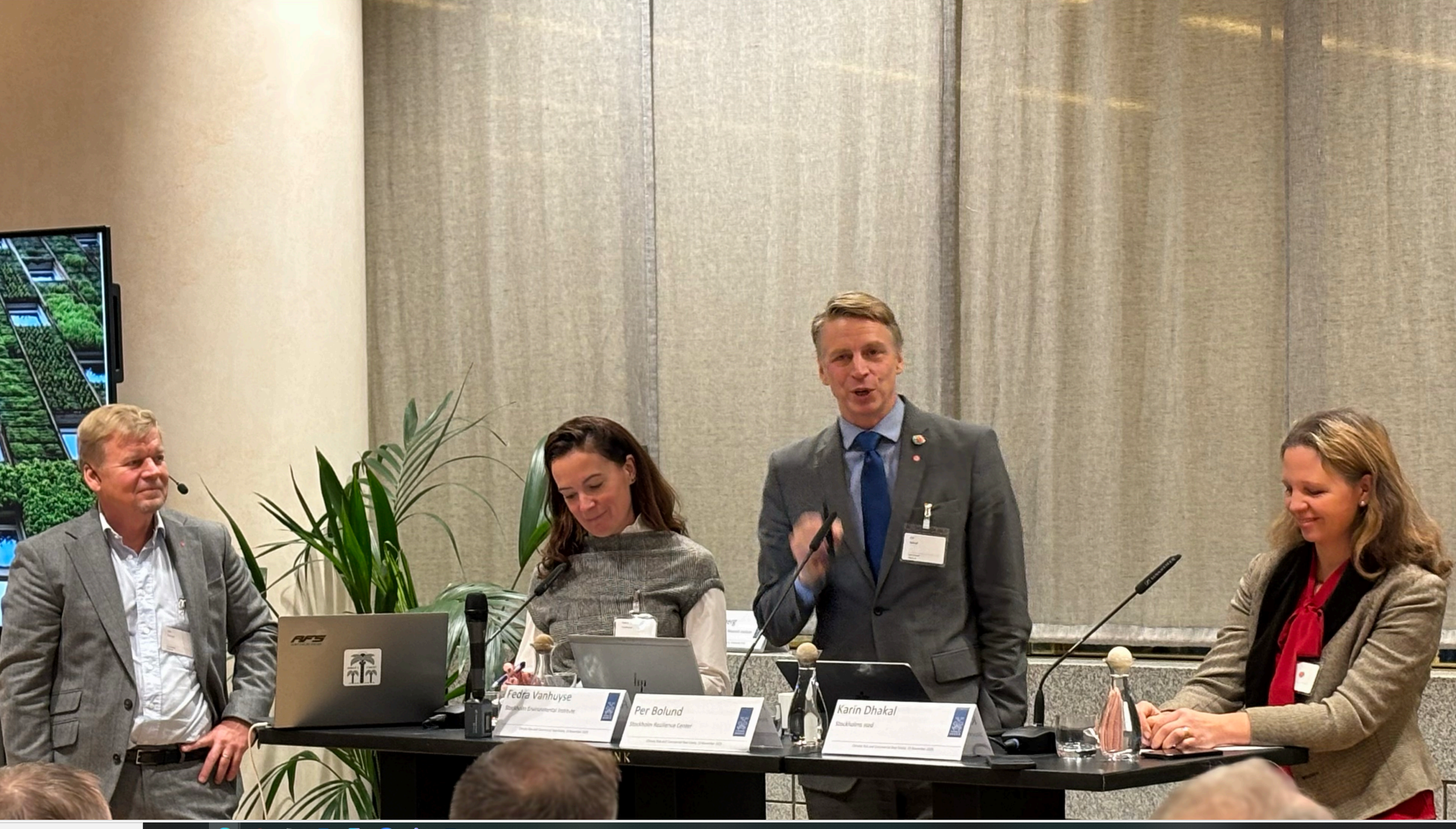
The day began with a series of research presentations, each followed by an open discussion led by a discussant. In session two in the afternoon, the panel discussions covered Data and measurement, Policy implications, and Ways forward. See the complete program below.
Reflections from the day
“The workshop that we hosted at Sveriges Riksbank underscored the growing recognition of climate and nature risks as significant financial threats, especially within the commercial real estate sector. Given this sector’s critical role in the Swedish economy, the discussion reinforced how these risks could have substantial implications for both the real economy and financial stability.
Building on our efforts to understand climate- and nature-related risks, we designed the event to bring together experts from diverse disciplines. We were delighted that the format succeeded in fostering a multidisciplinary dialogue, enabling participants from academia, industry, and public institutions to exchange knowledge and insights. While progress is clear, much work remains. Future events like this, along with deeper cross-sector collaboration, will be essential to close gaps and drive coordinated action,” says Cristina Cella, Advisor at Sveriges Riksbank.
“It was enriching to participate in the conference that brought together people from so many different fields. This allows for a broader range of knowledge and perspectives beyond one’s own profession. The discussions here are grounded in empirical evidence and research, rather than policy alone, and numerous questions arose throughout the day. That makes it a bridge between research and practice, which is valuable for us. I also believe it’s valuable for the researchers here, as they can gain insight into the logic behind our way of thinking. It’s a good mix,” says Rolf Marquardt, Chief Risk Officer at Swedbank.
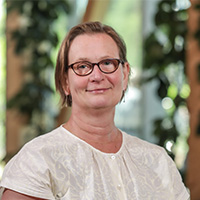
“Today’s theme highlights an issue we at SMHI have worked with for many years — and one that feels more urgent every day. Climate change is already reshaping our reality; in Sweden, the average temperature has risen by 2°C since pre-industrial times. Naturally, this affects the real economy, and we’re now seeing its clear ripple effects in the financial sector as well.
We have real challenges ahead, but I’m encouraged by how thoughtfully actors across the financial world — private, public, and academic — are engaging with these questions. Today’s presentations and discussions showed a meaningful blend of expertise and sincere commitment. At SMHI, we’re eager to keep the conversation going, and to keep improving the data and future scenarios that can support this important work,” says Anna Blomqvist, Climate Adaption Expert at SMHI – The Swedish Meteorological and Hydrological Institute.
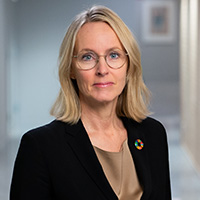
“Physical climate risks are imminent and a systemic issue that will escalate when climate change mitigation is not progressing in line with science. To address these problems, collaboration between scientists, policymakers, and the financial industry is crucial. Today’s event provided valuable perspectives and a platform for knowledge sharing that is needed to increase resilience in the Swedish real estate sector going forward,” says Anja Hannerz, Group Head of Sustainability at Nordea.

“This was the third event that we at the Riksbank organized together with the Sustainable Finance Lab. Previously, we had arranged two research conferences, but this time we sought a more practical discussion on climate change and the commercial real estate sector, which involved researchers, other authorities, and the private sector. The event turned out to be a great success, and many valuable connections were made throughout the day. Hopefully, this will lead to more collaboration among different stakeholders to understand the challenges better and move forward with possible solutions, says Ulf Söderström, Head of Research at Sveriges Riksbank.

“Sveriges Riksbank’s seminar about Climate Risk and Commercial Real Estate was very rewarding. The fact that Sveriges Riksbank, in collaboration with the Sustainable Finance Lab, organized a seminar on this topic is a success in itself, as the impact of climate change on financial stability is a significant and growing concern. It is therefore essential to raise awareness and knowledge about these risks. The strong turnout with many participants also shows that climate issues are becoming increasingly important for many actors in the Swedish financial market. I appreciated the structure of the day, with presentations of scientific studies in the morning and panel discussions with market participants in the afternoon, which provided a good mix of perspectives from both theory and practice. The fact that the seminar lasted an entire day also offered numerous opportunities for conversations and networking with other stakeholders, which was a valuable bonus. Overall, it was a well-organized and interesting seminar. I hope there will be follow-up events on various themes related to the connection between the environment/climate and the financial market, says Per Bolund,” PhD candidate at Stockholm University and former Minister for the Environment in Sweden.
Programme
Welcome address: Aino Bunge, First Deputy Governor, Sveriges Riksbank.
Session I – research presentations chaired by Ulf Söderström, Sveriges Riksbank
- Emilia Garcia-Appendini at the University of St. Gallen. “Weathering the storm: The effects of natural disasters on households under universal insurance”. Discussant: Christian Thomann, KTH
- Tommaso Piseddu at Stockholm Environment Institute. “Blooming algae and falling returns on investments. The Swedish housing market in the face of biodiversity risk” Discussant: Kent Eriksson, KTH and SFL
- Giuliano Di Baldasserre at Uppsala University. “The challenge of unprecedented floods and droughts in risk management”. Discussant: Øyvind Paasche at NORCE
Session II: Panel discussions
Data and measurement. A deep dive into the challenges related to the measurement, interpretation, and application of climate data for assessing financial risk.
- Chair: Valentin Schubert at Sveriges Riksbank.
- Ralf Doescher at SMHI – The Swedish Meteorological and Hydrological Institute.
- Laura Ni at If P&C Insurance
- Ida Westerberg at IVL Swedish Environmental Research Institute
Policy implications. Focus on current private and public responses to commercial real estate’s exposure to climate risk.
- Chair: Cristina Cella at Sveriges Riksbank
- Niklas Frykström at Sveriges Riksbank
- Rolf Marquardt at Swedbank
- Philip Thörn at IF P&C Insurance
Ways forward. Where do the key governance and coordination gaps lie in addressing climate risks in the commercial real estate, and what policy or institutional actions are needed to close them?
- Chair: Kent Eriksson (stand in for Mark Sanctuary). Both at KTH.
- Per Bolund at Stockholm University and KTH
- Karin Dhakal at Stockholms stad
- Fedra Vanhuyse at Stockholm Environment Institute