
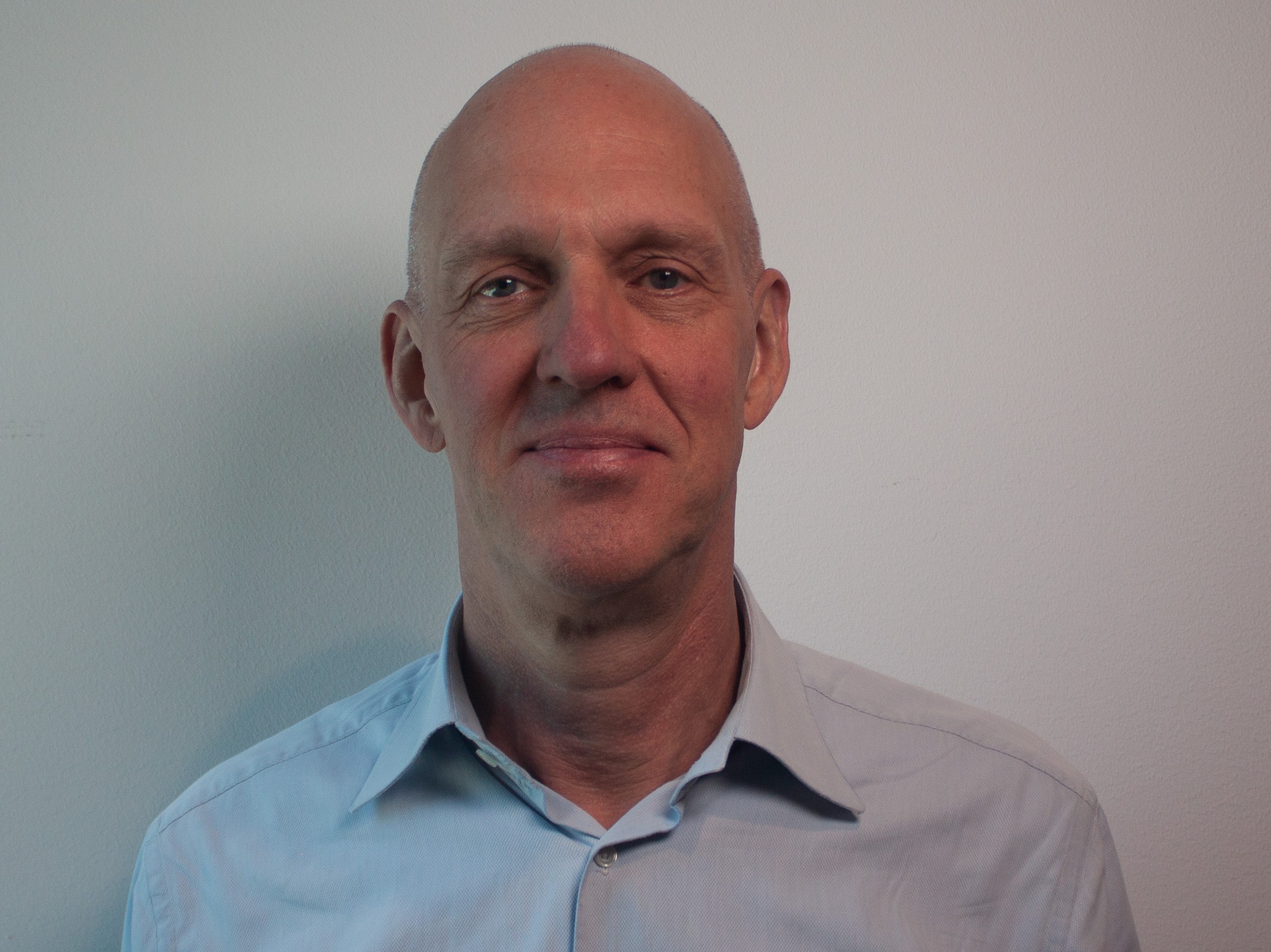
Over the past seventeen years, Johan Florén has worked at the Seventh AP Fund (AP7) in various roles, most recently as Head of Communications.
“It has been a journey—truly interesting. Pensions are about societal issues, which I find important and meaningful. AP7 is also part of the public sector, a government authority. What I find particularly interesting is how the country is governed at different levels,” he says.
During his university studies, he studied political science, among other subjects, and now he saw in practice what that involved.
“Asset management turned out to involve more information processing than I had previously imagined. At AP7, I got to see how professional asset management works. It was a new world, and I quickly found it very interesting.”
Previously, he also worked in the private sector, focusing on communications and sustainability, including at Amnesty. During the CSR wave in the early 2000s, when sustainability began to enter the financial world, he sometimes felt that Amnesty was just a very small cog.
In 2009, he joined AP7. At that time, only a small circle of organizations worked with sustainability issues. He also served on the board of Swesif, eventually becoming its chair, during the period when sustainability began gaining broader traction.
AP7 a pioneer
“It was AP7 that developed the method of norm-based screening as a strategy. Institutional actors still use this approach. It was exciting to be part of that journey, and at the time, sustainability moved from the periphery to the top of the news agenda. Around 2016, with Trump as president, the first counterforces emerged, and by 2021, they had grown stronger. Perhaps we are seeing a crescendo now, in 2026,” he reflects.
Today, he sees a divide: on one side, companies that want to continue as before, and on the other, those who believe sustainability efforts have gone too far.
Johan was also a member of TNFD (the Taskforce on Nature-related Financial Disclosures), a coalition of 40 organizations operating worldwide. The group, consisting of asset managers, banks, audit firms and others, focused on nature-related risks.
“We worked for two years and produced several beta versions that were launched among hundreds of stakeholders. And we actually reached our goal—the framework is now implemented. This served as a link between the Montreal Protocol, the global environmental agreement from 1987, and the ISSB, a global body creating unified standards for corporate sustainability reporting. It has had a major impact; previously, there was nothing for companies and investors,” Johan explains.
Doctoral studies
Johan was in his early 50s when he felt a desire to focus more deeply.
“In my job, I constantly need to familiarize myself with a large number of issues. I have to become sufficiently knowledgeable in several of them, and then move on to the next. Over time, I felt a need to dig deeper into a more defined area.”
He qualified for doctoral studies and was accepted at Lund University. Initially, he studied alongside his work in the evenings and on weekends. In 2025, he took a six-month leave to complete his work. Studying full-time gave him a taste for it and explains why he has now moved to the Sustainable Finance Lab as a Public Affairs Officer.
What is your thesis about?
“Sustainability problems are very difficult to solve—they are what we call ‘wicked problems.’ When an organization takes these on, it has to relate to them in some way. The landscape is constantly changing, with new initiatives and new legislation emerging. It is a continuous process of adaptation, which organizations often have not fully addressed. I have focused on interviewing members of Climate Action 100+ and asked how they relate to this situation. What strategy do they have?”
One conclusion is that everyone in the system depends on each other.
“Politicians, companies, investors, researchers, NGOs—all depend on each other. A collective, interactive process is needed to reach a shared understanding of what should be done. Communication plays a central role, and it should take the form of an interactive process rather than focusing on simply sending out information.”
Johan also highlights an important difference in approach: “We, as an organization, should do everything we can as long as it does not harm the organization” versus “We should do the best we can.” He says the upside may be somewhat unclear, but if the starting point is that we share a common societal problem, then it is logical to participate fully.
Greenwashing and greenhushing
Johan sees companies undercommunicating their sustainability efforts as a problem today. This may be due in part to caution and a desire to avoid being accused of greenwashing. However, the downside of “greenhushing” is that inspiration and leading organizations do not become as visible as needed to influence those around them.